This summer I worked with ABWE Storytellers Abroad as a documentary missions photographer along with a team of seven others. The field was Gdańsk, Poland, a city rich in history and culture on the Baltic Sea.

On my first Sunday in Gdańsk, I attended a Ukrainian church service where I met Pasha. Perhaps because of the language barrier or being nervous to meet someone for the first time, Pasha greeted me with a tentative smile and hand shake. Using Google translate, I told him that I was very much looking forward to hearing more about his journey to Poland from Ukraine as his assigned Storyteller photographer for the trip.

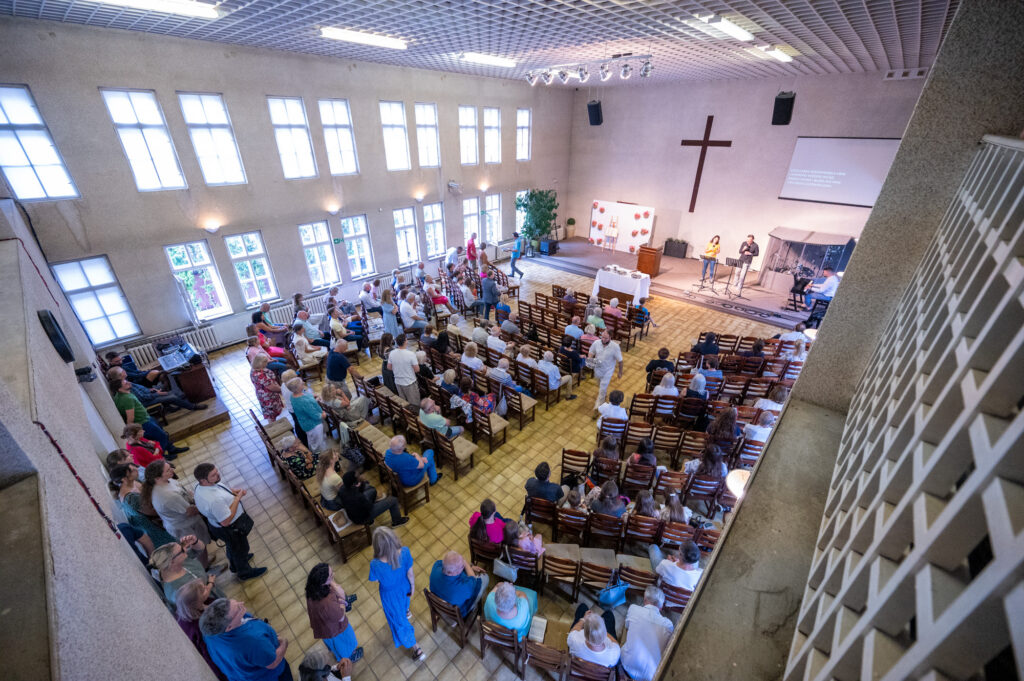
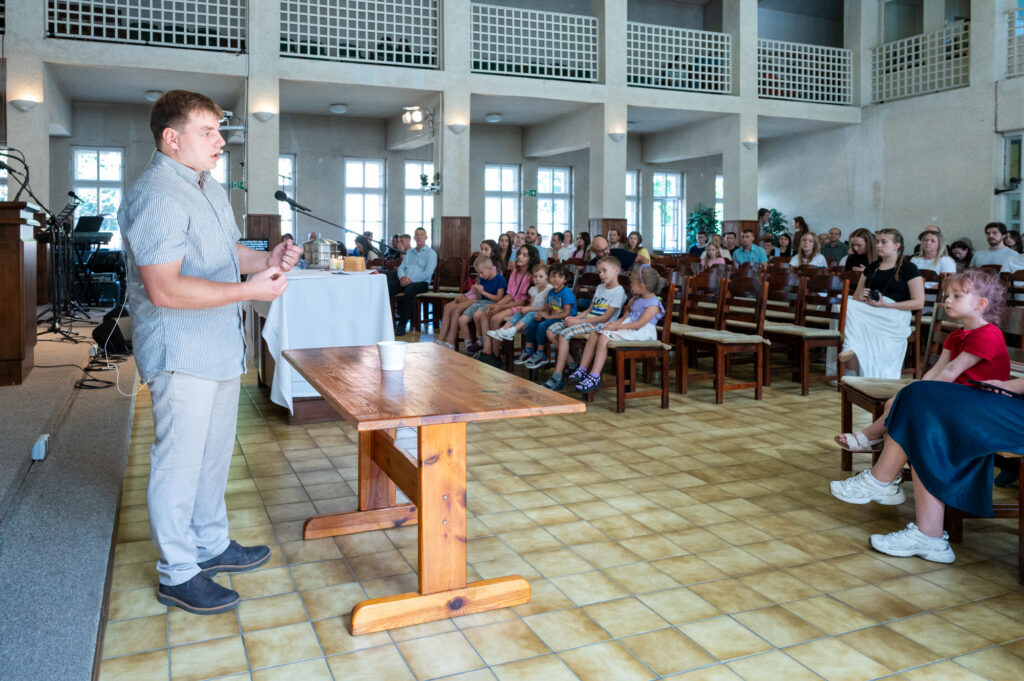
Part way through the service, Pasha came up to the front of the church to give the lesson of the week to the Ukrainian children in the front row. This humble young man who barely made eye contact with me at first, transformed into a passionate and dynamic preacher.
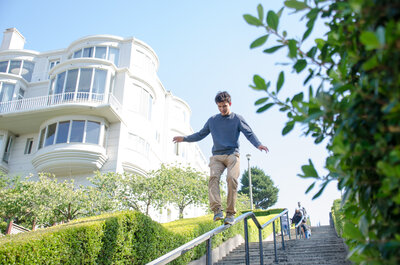
The next day, we had an appointment for me to photograph Pasha and also interview him to document his story. With the help of an interpreter, he openly talked about the details of how God called him out of a life of crime only to later put his life on the line to share the gospel with his Russian enemies. What follows is Pasha’s story framed with the verses from his favorite passage, Psalm 23, woven into his testimony. Each section is coupled with images from our photoshoot around the neighborhood where he regularly met with ABWE missionaries Nick and Jill for bible study and discipleship.
The Lord is my shepherd, I lack nothing.
“I grew up in a very poor family. My dad was an alcohol addict and the family had lots of children. My mother worked three jobs to feed the family. Very early in my life I started helping her with jobs.
“Then when I was eight, my Christian neighbors invited me to attend a church youth group. I liked Sunday school because I didn’t feel like this poor child there. It was nice to be around other children.
“Despite feeling welcomed at the church, I continued to live a double life during my teen years – one with the church youth and one with my friends on the street. I still liked the second life more because alcohol just helped me deal with the negative sides of my life.”
He makes me lie down in green pastures, he leads me beside quiet waters, he refreshes my soul.
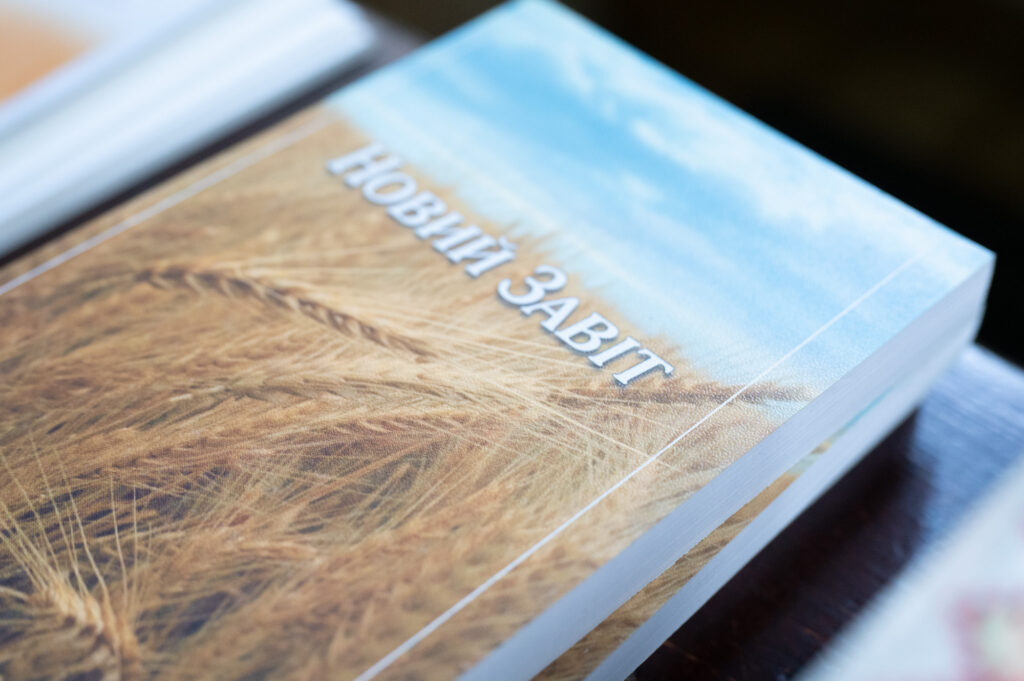
“Things started to change when I was 18. I received a book – the Gospel of John with commentary. I didn’t like reading, but somehow I found this book interesting and I read it three times. Finally I realized that Jesus is not a character who came to make life easier. I realized the essence of what he did, like the key thing of saving us from our sins.”
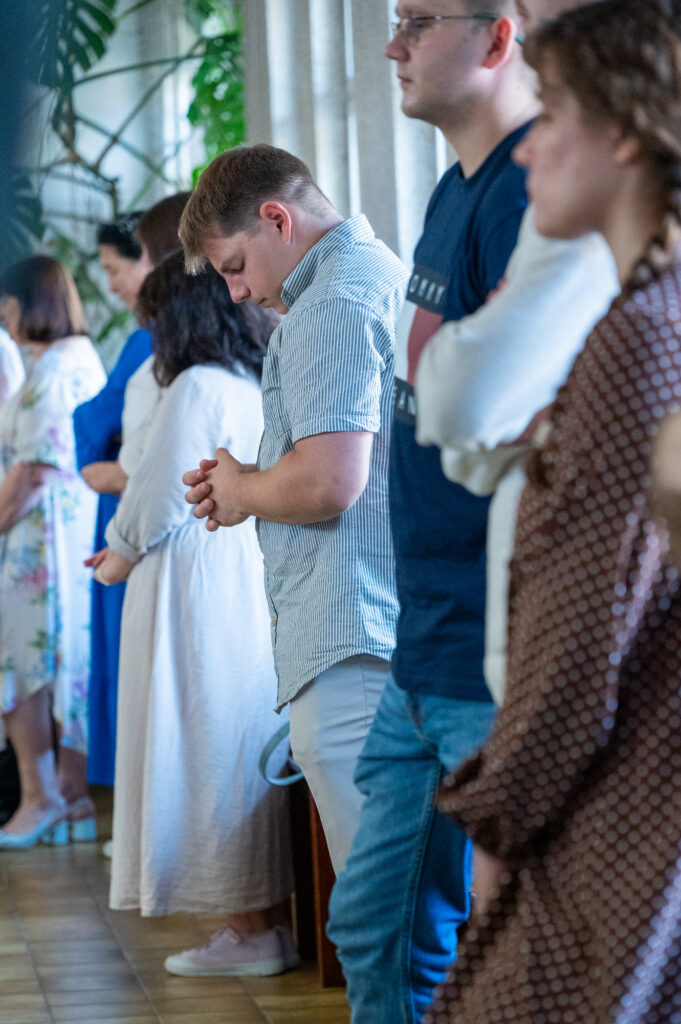
Understanding forgiveness for the first time, Pasha wanted to repent of his old ways and be baptized. The day after this revelation, he attended a meeting at the church and prayed for God to forgive him of his former life.
“I was more worried if God would actually forgive me. It was a very short prayer because I tried to hold back my tears. But after I said, ‘amen’ it was like a mountain, not just a stone, had been lifted from my shoulders.”
Pasha began to take the classes his church offered to prepare him for his baptism. He was one week away from finishing the class when tragedy hit.
“The devil is most dangerous for the people who are getting ready to be baptized because he’s actively trying to take people away from God. I got a little pride in myself and started to think, ‘The devil can’t do anything to me.’ ”
The week before Pasha was to be baptized, his grandmother suddenly died. She had taken her own life. He was devastated.
“During her funeral I started swearing at God and shouting at him. ‘You aren’t actually loving. I don’t believe in your sacrifice. I don’t believe in a God who takes the most precious things from me.’ I fully rejected him.”
He guides me along the right paths for his name’s sake.
Pasha returned to his previous way of life, drinking, fighting, and stealing. He and friends would rob the houses of the rich and torment them. But he would hear an inner voice saying, “You don’t need this. You are not like this.” To drown out the voice, Pasha just did more dangerous things. He was 23.
Then Russia invaded Ukraine in early 2022. Soldiers entered his village and began to occupy his region.
“Suddenly there was not enough food or enough work. I had to start begging for food to help my family because the government was unable to help everyone. A family from the church saw me on the street and invited me to come back. I was very ashamed of all the words I had said to God and I knew whose voice that was that had been speaking to me. I wanted to repent again.”
Returning to the church, Pasha was received with mixed reactions.
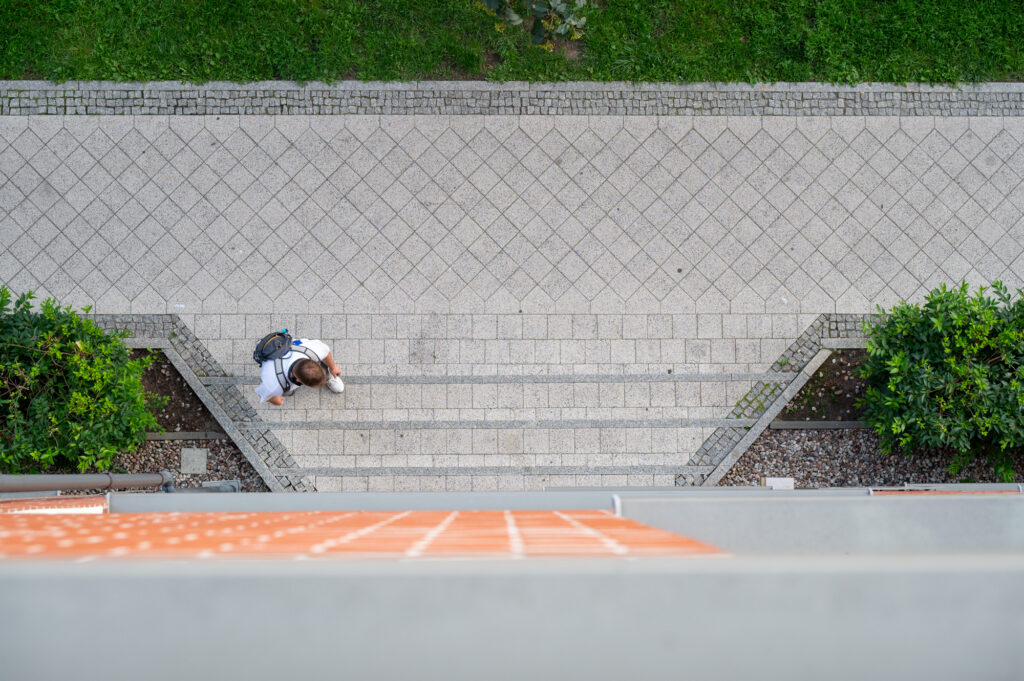
“I heard some say, ‘Oh, as soon as there’s a problem, you immediately run to God? There’s a war, and suddenly you run back to the believers?’
“It didn’t bother me, but the pastor spoke up about it and confronted the church. He had me stand in the front beside him and he exhorted the congregation for their response to my return. It felt good to be supported for once.”
Slowly, the imperfect church started to love Pasha and he loved them back. This was the beginning of the journey back to the church.
Pasha lived with the pastor for a time during the occupation. He taught Pasha how to work with people — how to distinguish their different needs, their pain, their feelings, their joy, their prayers, and their requests. Then he suggested Pasha try preaching.
“I was so afraid and so nervous because I considered myself a very bad person. I still considered myself unfaithful. I thought I was the worst possible example for these people, especially as a preacher. To my surprise, the church received me very well.”

“In my sermons, I sometimes stumble and I get nervous. I can often mix up my notes, but people say, ‘It’s actually very good that you preach from the heart.’ In other words, my sermons are alive because I’m not a preacher of cheap grace. I’m not a preacher who simply says, ‘God is so good, he won’t let anything bad happen to you.’”
Even though I walk through the darkest valley, I will fear no evil, for you are with me; your rod and your staff, they comfort me.
Pasha and the pastor started traveling to different churches in the region. They wanted to bring the churches back to life because many had closed down because of fear of the military presence. God started to open doors for Pasha to even share the gospel with the Russian soldiers at the checkpoints.
“We would stop at the checkpoints, give them little booklets and New Testaments. I never would have thought that God would use us even in working with the soldiers. Over time, God blessed us so much that the soldiers didn’t even check us anymore. They would let us through because they already knew who we were. They knew that we were preachers and that we travelled around to the churches.”
“We could visit six or seven churches in a week. I could preach up to ten sermons a week. Of course, they were short because there wasn’t much time to prepare. I saw many very happy people who had returned to church. I also saw many very frightened people, but it was so encouraging when we could talk to them about Christ. So that’s how we worked for about a year. Time flew by.”
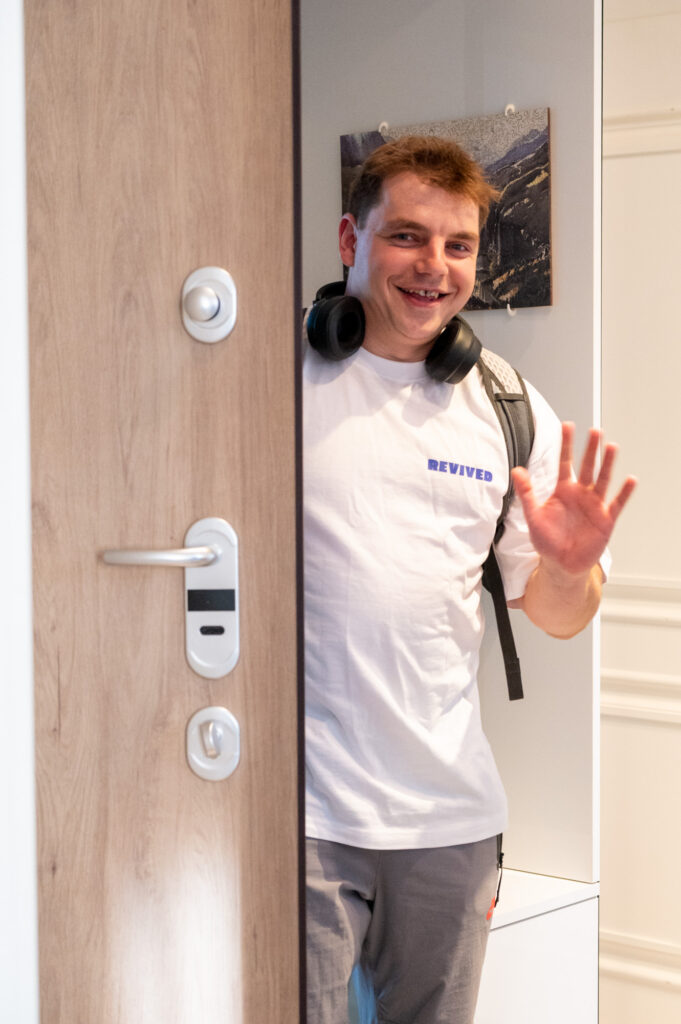

Pasha arrives at Nick and Jill’s home in Gdańsk for discipleship and mentorship.
You prepare a table before me in the presence of my enemies. You anoint my head with oil; my cup overflows.
With the occupation came a curfew for the region. Despite having permission to be on the streets past curfew, Pasha was stopped by a Russian patrol one evening on the way home from helping his friends tend to his beehive.
“I was literally 3–4 houses away from my home when a vehicle pulled up. Soldiers got out of the car. They started checking my documents and asking why I was out. They hadn’t been informed that I would be passing through at this particular time. I wasn’t afraid at first. After checking my documents, they began looking through my phone. It wasn’t locked, and I had nothing to hide.
“They found videos from the church and photographs on my phone — places where there were crosses and Christian inscriptions. They thought I was a Jehovah’s Witness which is banned in Russia. They immediately became suspicious of me and started yelling at me. They threw me to the ground and began beating me. They called a second patrol which did the same to me. They tied my hands and feet and put a sack over my head and put me in a vehicle. ‘You’re not going home. You’re as good as dead.’ they said. If a young man fell into the hands of the military, there were two possibilities: either you worked for them, or you died. I didn’t want to work for them. So I understood that I would probably die.”

The soldiers drove Pasha to a building and put him in the basement. They beat him and asked again why he was out past curfew. He answered the same as before. They didn’t like his answers so they continued to beat him. They asked him the same questions over and over. He gave the same answers each time, but they would continue to beat him. This went on for some time.
“Finally the soldiers stopped. I still had the sack over my head. I had no strength left. I just sat there and prayed: ‘God, You know that I’m in this situation. The chances that I’ll return home are very small. Receive me just as I am. Let my return to You be worthy. Receive me, truly, as a servant who has returned.’”
Eventually a commander came down to the basement. He asked the usual questions but the conversation somehow led to Christ. He removed the sack from Pasha’s head.
“We began talking about who Christ is. I told him that Christ is the Son of God who died for us. Other than Christ crucified, there is nothing else that I preach or believe in. Through certain experiences in my life, I came to understand that my life without God was simply meaningless. I didn’t want my life to end from an alcohol overdose or in another fight where someone would split my head open. The commander began asking good questions — why Christ came, why all of this happened, why God protects some people and not others. We had a very good conversation. I wasn’t afraid. I wasn’t thinking about the position I was in. I forgot that my hands and feet were tied. I simply talked to him about Christ. I felt so comfortable and at ease that I completely forgot where I was and what had happened. I don’t know how long we talked, but it was a very long conversation.
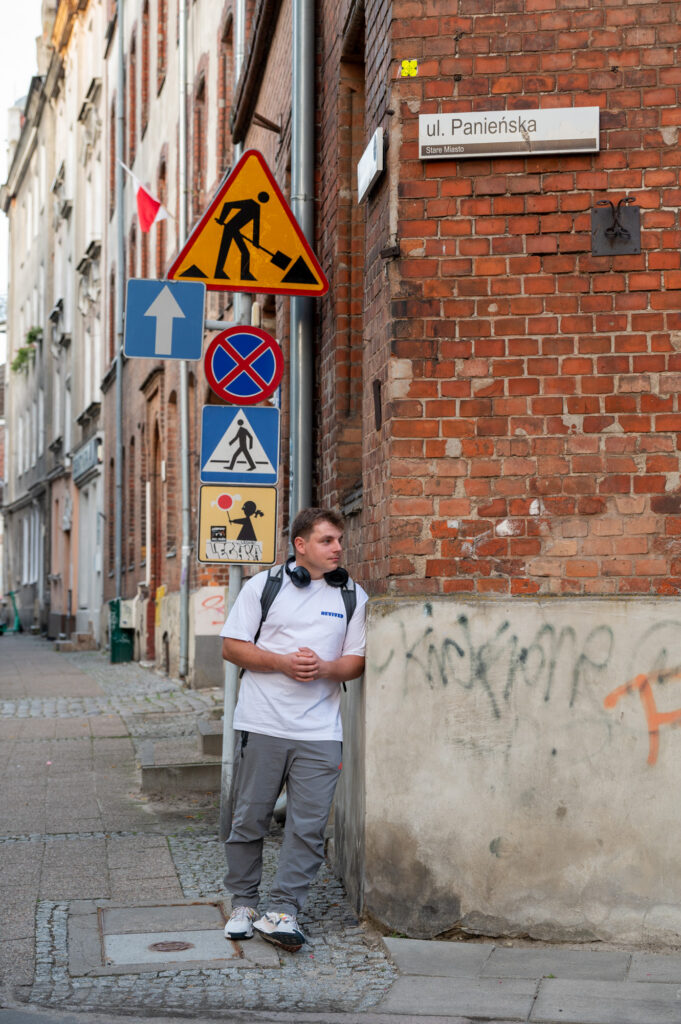
“Then one of the soldiers who had been beating me returned and said, ‘We have nothing against you. We’ll take you home.’”
Early the next morning, they brought Pasha home.
“When I examined my body in the shower, I only had bruises and miraculously, no broken bones. I felt compelled to write a sermon on Psalm 23 because I had just lived through what the Psalmist sings. God had prepared a table for me in the presence of my enemies. Now I was doing the thing I loved most. I was talking about Christ to a soldier — a man who, essentially, was my enemy. Later, as I thought about what had happened, I realized that God had specifically allowed me to be taken to that basement so that I could speak to that man. Yes, I paid a price for it. But the point was this: the most important thing was that I had spoken to that commander. I had shared the Gospel with him. I had told him who Christ is and what Christ had done for him. God truly showed me how powerful He is in my life—that He is willing to lead me through life-threatening circumstances simply so that I can share the Gospel.”
Surely your goodness and love will follow me all the days of my life, and I will dwell in the house of the Lord forever.
In June 2023, the Kakhovka Dam was breached. A multitude of homes in the area were flooded, including Pasha’s. Pasha’s home and most of the contents were ruined. Shortly after, Pasha had an opportunity to leave for Poland.
“Of all my belongings, the only thing I managed to save was my Bible. Of everything I had, that was the only thing I was able to bring here to Poland.”
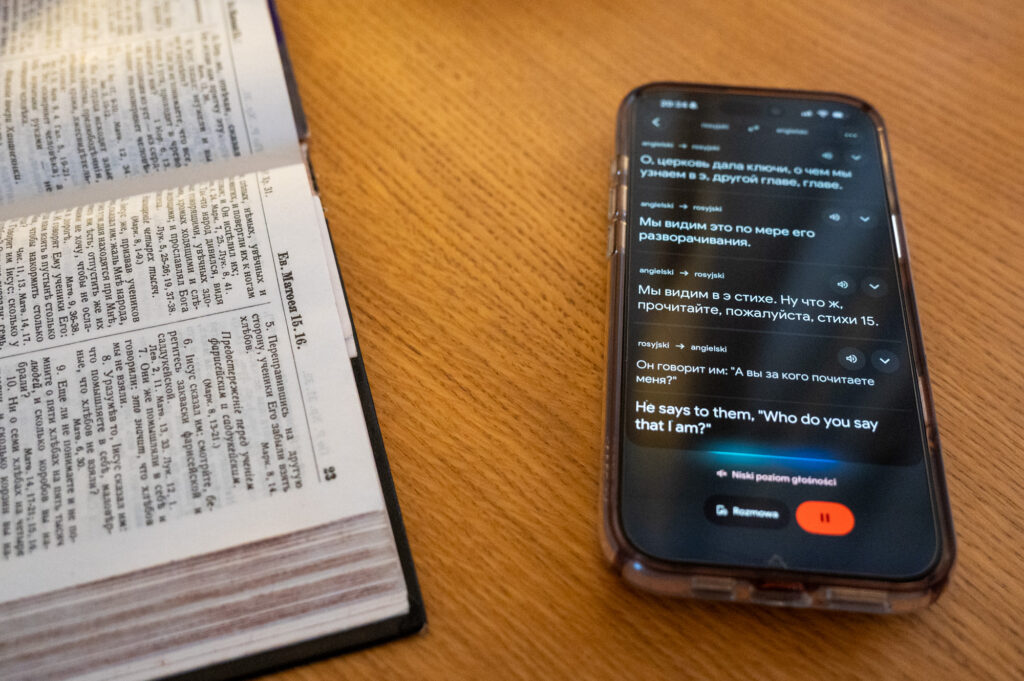
Pasha arrived in Gdańsk, Poland in 2023. Since relocating, he has involved himself with a Ukrainian church founded by Ukrainians who fled to Poland years earlier. It was through this community that Pasha met ABWE missionaries, Ron Davis, Nick and Jill Toothman, and Micah and Emily Griffith.
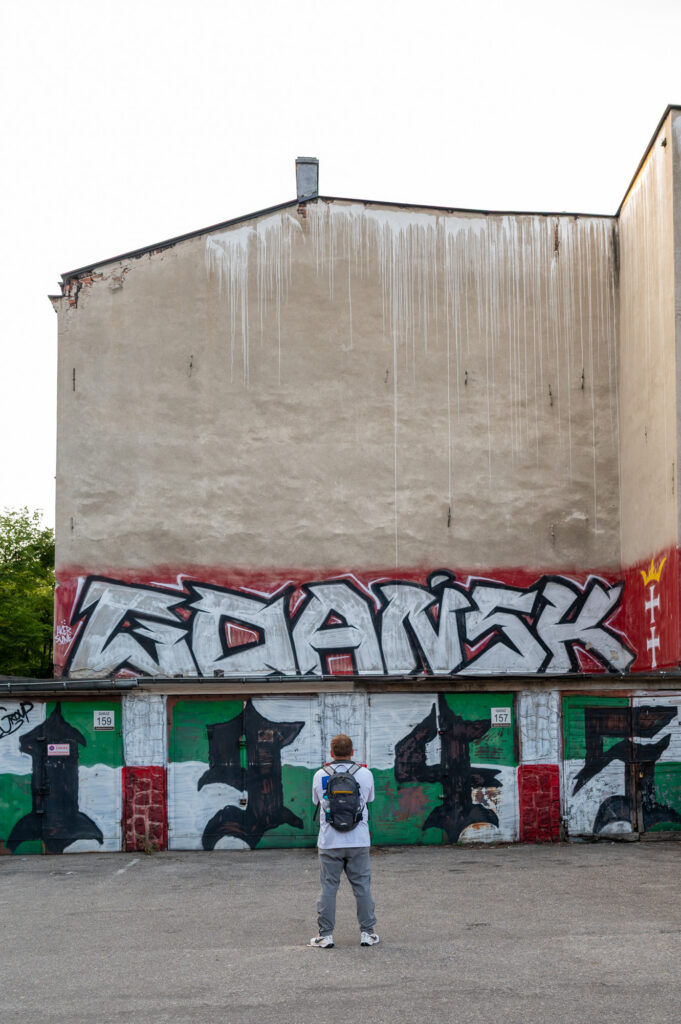
“Nick taught me how to be a leader of a home group. Now, I have my own home group. I also preach to children and to the church. Ron taught me that. Micah especially helped me believe in myself, because I was constantly putting myself down and insulting myself. Jill taught me how to relate to girls because I was a rather rough person. I wasn’t very considerate toward girls. Thank God, everyone contributed something to my growth.”
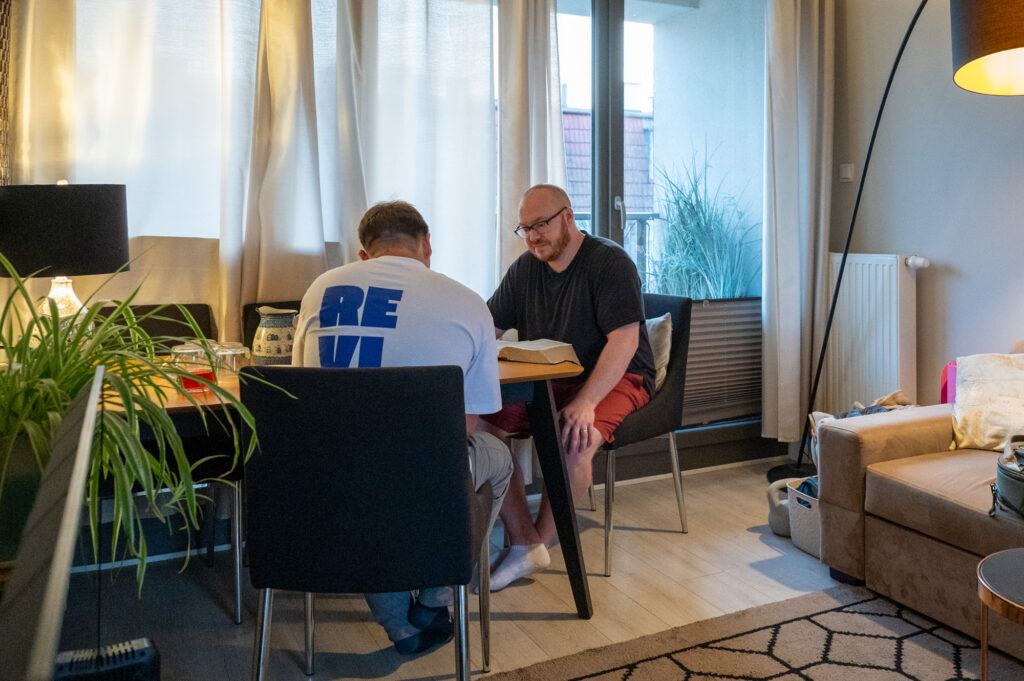
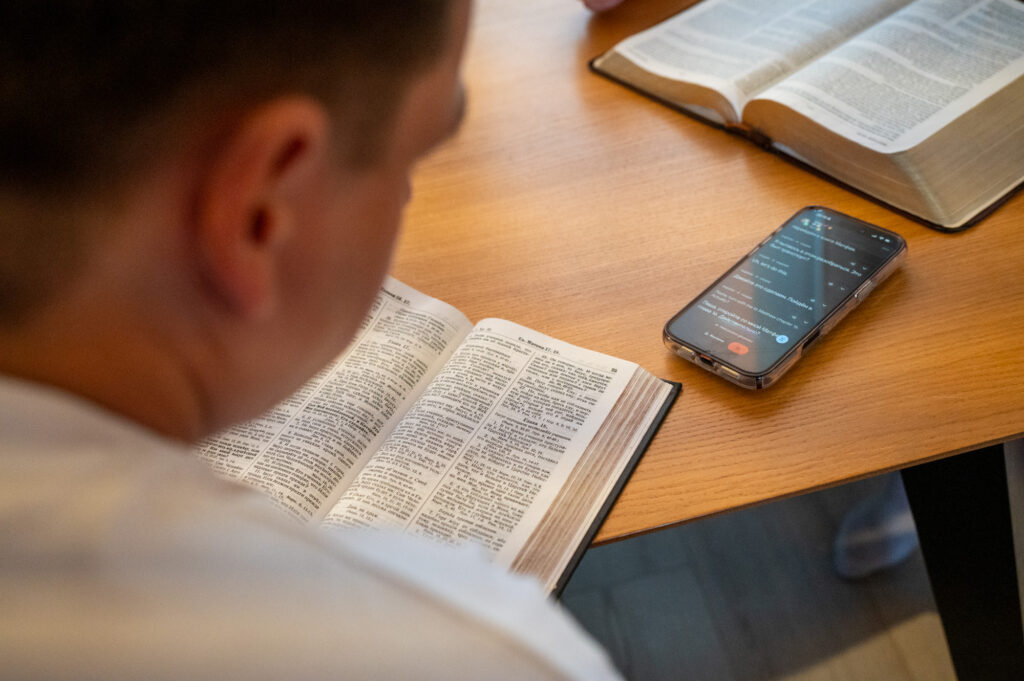
At the end of our interview, Pasha’s final message he wanted me to share was this.
“It’s not frightening to lose your job, lose your career, your business, your house, or even the country where you live. What is frightening is to fail to respond to Christ when He calls you to serve Him. To refuse because you have a job, a career, or a reputation, that is what is frightening. Christ told us, ‘Go and make disciples of all nations.’ It will be difficult. Christ tells us that very clearly. But through those difficulties and trials, you see God’s hand so clearly. You see how He leads you. You give Him everything, and it turns out that He provides everything you need: clothing, food, even a house and your time, even though you started with nothing. So I would encourage you: Don’t be afraid. Take that bold step. Serve Christ while you have time. While you’re young and energetic. Serve God.”
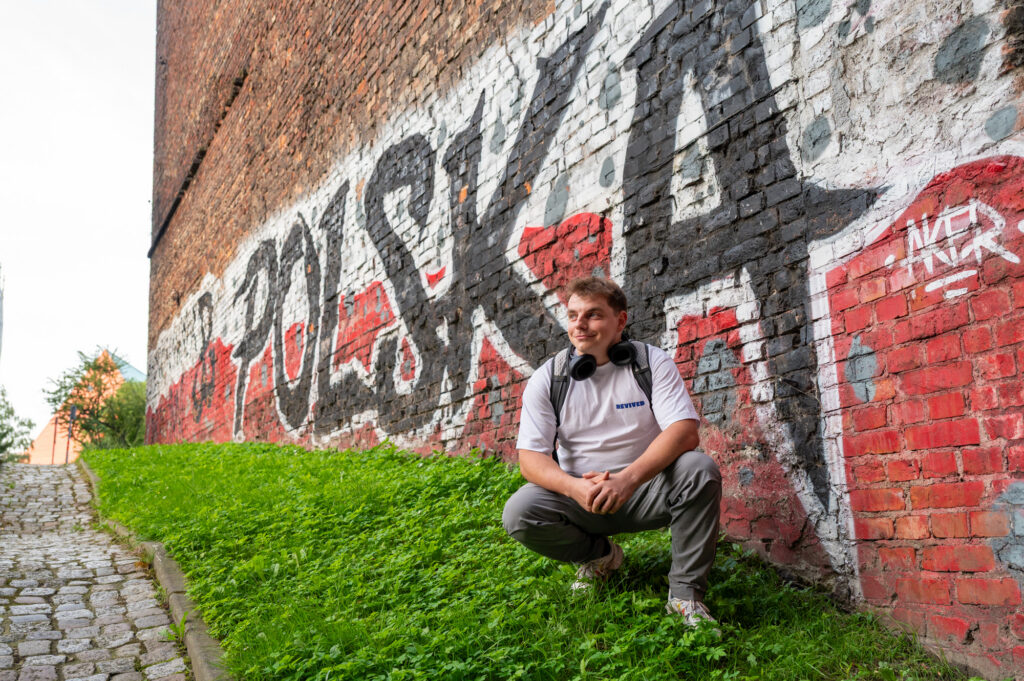
Need this story translated? Click here to view this story in Ukrainian.





Pasha testimony was amazing and very inspirational to a time as such as this. Thank you so much for sharing this story.
Thank you for taking the time to read it. I’m glad it could encourage you. Please feel free to share!